


Offering
Solutions We Provide





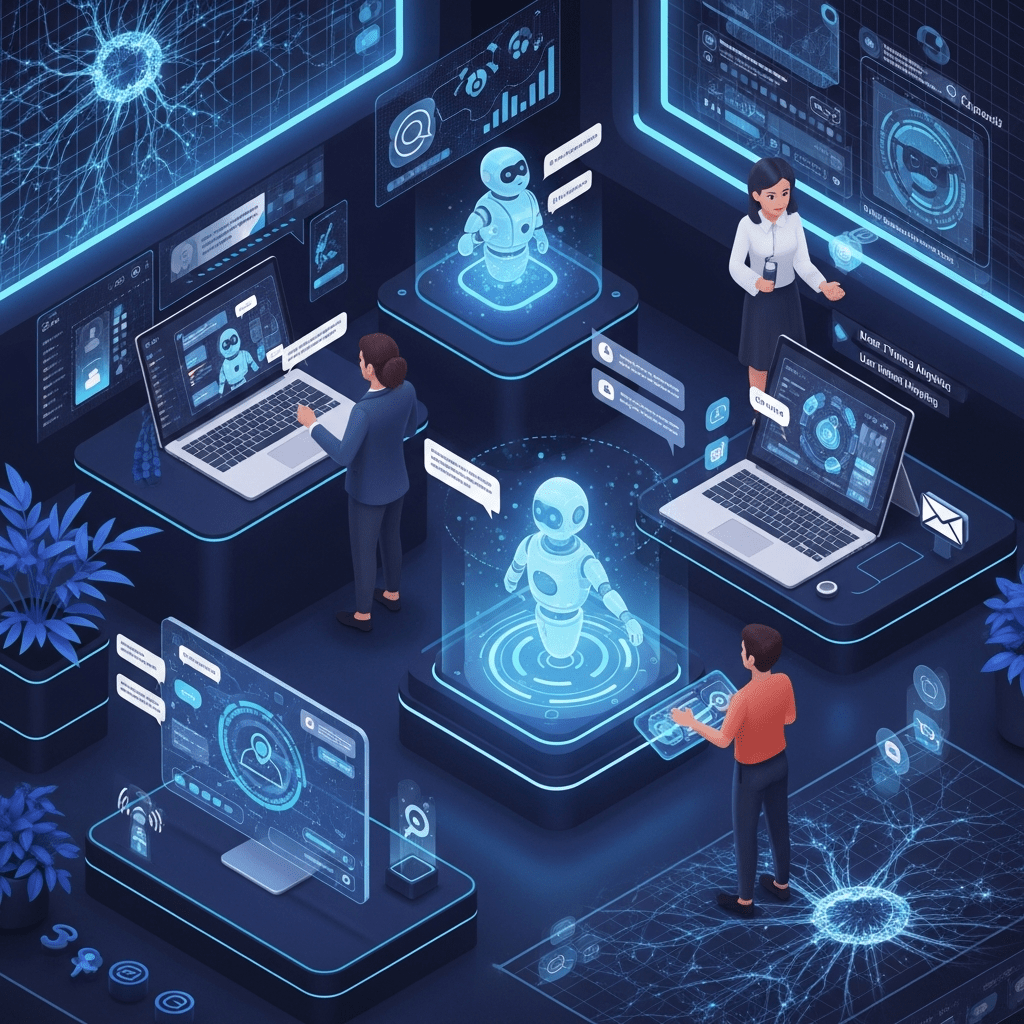

Customer expectations have never been higher than they are today. Now they want fast responses, personalized solutions and seamless interactions across every digital touchpoint. Traditional support teams can’t always respond instantly or scale during peak hours. This is why AI chatbots are changing the game for businesses in 2026.
Today’s chatbots are smart. They are not just automated responders. They think, learn, understand intent, almost like a human. They can fix problems, help you buy things, and even guess what you need before you ask. Smart businesses are using them to make customers happier.
1. Instant Answers, Zero Waiting
The best part for you? No waiting. AI bots give you answers right away, even if thousands of others are asking questions, too. They don’t need breaks or sleep. If it’s 2 PM or 2 AM, the help is there.
For companies, this means:
- Reduced ticket backlogs
- Higher customer satisfaction
- Faster resolution and increased loyalty
In 2026, fast service is key, and AI makes it happen.
2. Smarter Conversations with Human-Like Understanding
Old chatbots sounded like robots. New ones are much better. They can now understand:
Modern bots understand:
- Customer intent
- Emotions behind messages
- Context from past conversations
- Preferences and purchase history
They talk in a natural way. They can tell when you are upset and are programmed to be helpful. If the problem is too big, they connect you to a human helper.
3. Personalized Support at Scale
Personalization has become the core driver of customer experience. AI analyze user behavior purchase patterns, and browsing history to give you the right help at the right time.
For example, the bot might:
- Suggest a better version of a product you use.
- Remind you to renew a service before it stops.
- Give you instant help to fix a device problem.
This used to take a big team of people, but AI does it quickly and correctly now.
4. Multi-Channel Engagement Made Seamless
People use many apps: websites, WhatsApp, email, and social media. AI chatbots can keep track of your conversation across all of them.
If you start talking on Instagram and then move to the company’s mobile app, the bot remembers everything. You don’t have to start over or repeat yourself. This smooth service is a top reason why companies are switching to AI.
5. Lower Operational Costs, Higher Efficiency
Replacing or supplementing support teams with AI significantly reduces workload and cost. Bots handle cover repetitive FAQs, order tracking, returns, onboarding guidance, and basic troubleshooting. This enables Human agents focus on complex or sensitive issues.
This means:
- Smaller support team workload
- The company spends less on hiring and training.
- The service is available 24/7 without extra cost.
Final Idea
AI chatbots are not just a nice extra thing to have anymore. They are the main way modern businesses give support. Companies that use AI now will be the leaders later. AI brings quick answers, personal help, saves money, and connects all your apps.
In 2026, customer support is not just about fixing things. It’s about knowing what people need, making the journey easy, and building a strong relationship.
FAQ
Are these chatbots going to replace all human customer service jobs?
Not likely! Think of them as super-helpers. They take care of the simple, boring stuff—like answering common questions, resetting passwords, and tracking orders—which frees up the human agents. The human team can then focus on the really tough problems or sensitive issues that need a personal touch. It’s more about humans and AI working together.
How can a chatbot understand what I mean if I don’t use exact keywords?
Modern AI chatbots use something called Natural Language Processing (NLP). This means they don’t just look for specific words; they analyze the entire sentence and the context to figure out your intent. They can often understand slang, typos, and different ways of asking the same question, making the conversation feel much more natural than older, simple bots.
What happens if the chatbot can’t solve my problem?
If the AI reaches a point where it can’t give you a good answer, it’s programmed to automatically hand you over to a human agent. This switch is usually seamless. The best part is that the bot gives the human agent all the information from your chat so you don’t have to explain everything all over again.
