



Mark Gibbons
Co-founder, Tapitag



Google Search is evolving beyond its traditional list of blue links. AI-powered search experiences, conversational queries, contextual recommendations, and more personalized results are changing how users discover information, compare businesses, and make purchasing decisions online. For businesses that depend on organic traffic, these developments make it increasingly important to understand how search visibility works today.
Recent changes to Google Search show that the platform is focusing more heavily on AI-driven experiences while continuing to connect users with relevant websites, publishers, and content sources. Google’s AI Mode, AI Overviews, enhanced linking experiences, and improved query understanding are influencing how SEO professionals approach content creation, technical optimization, and digital visibility.
For businesses, the challenge is no longer limited to ranking for individual keywords. It is about building a website that search engines can understand, content that genuinely answers user questions, and a brand that people can trust across digital platforms.
1. Google Search Is Moving Beyond Traditional Keyword Searches
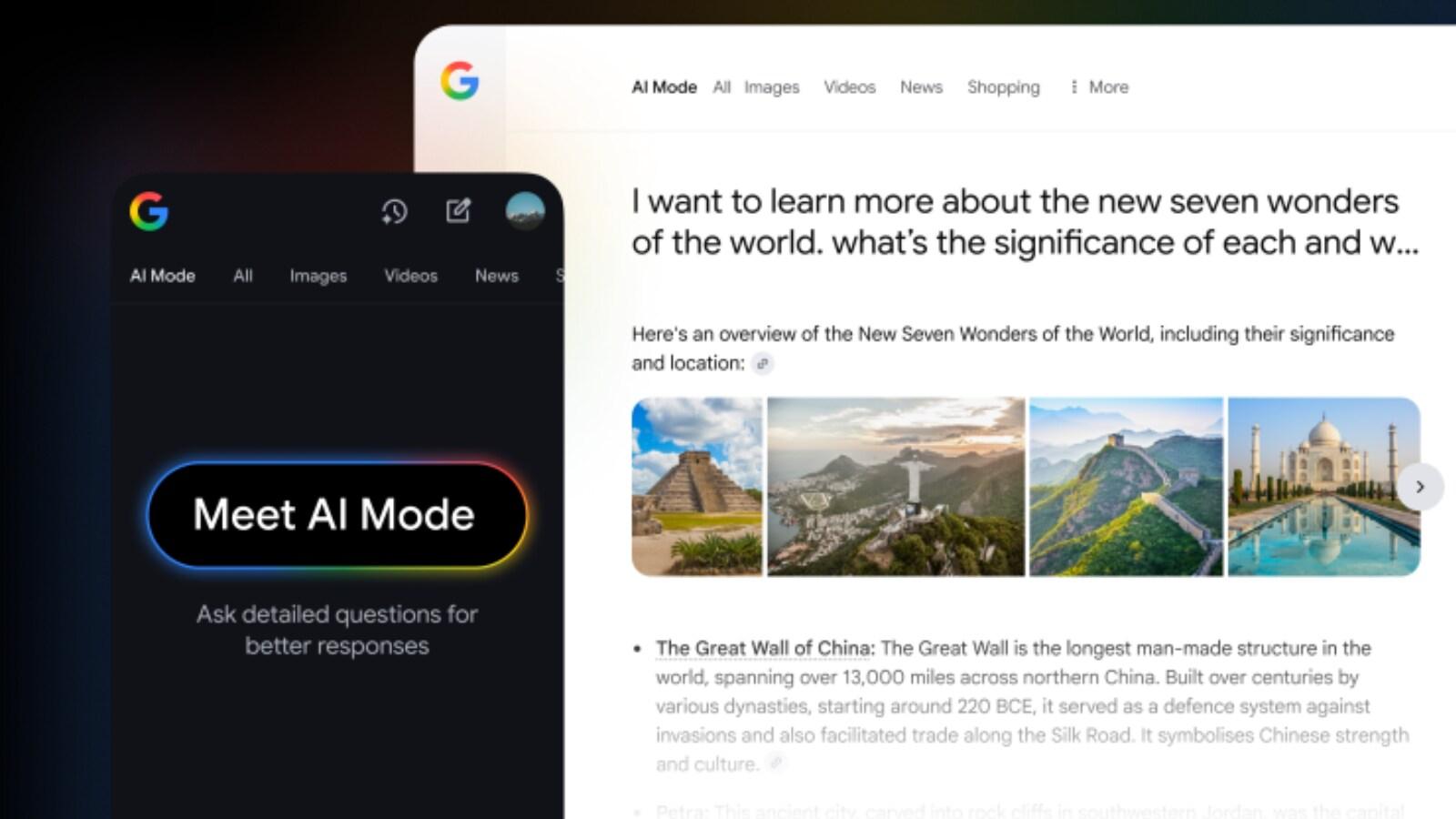
Traditional Google searches usually involved entering a short keyword or phrase and reviewing a list of relevant pages. Users now increasingly search with complete questions, detailed instructions, multiple requirements, and complex queries that require more than a simple result.
Google’s newer AI-powered search experiences are designed to understand context, connect information across different sources, and respond to more complex searches. AI Mode can support deeper exploration, follow-up questions, and comparisons, allowing users to continue their research without repeatedly starting a new search.
This change affects how businesses should approach keyword targeting. Instead of creating content around isolated keywords, websites should address complete user needs, related questions, decision-making factors, and supporting information.
For example, rather than targeting only “best web development company,” a business could create content that answers:
- Which web development company is suitable for a small business?
- What technologies should a business choose for a new website?
- How much does custom website development cost?
- What should businesses check before hiring a development agency?
A broader, more useful content strategy can help websites become relevant to a wider range of search intents.
2. AI Overviews and AI Mode Are Changing Content Discovery
Google’s AI Overviews and AI Mode are changing how information is presented within search results. Instead of always requiring users to open multiple pages, AI can summarize relevant information, connect different sources, and provide a starting point for further research.
Google has also been improving how links appear in its AI experiences, including more prominent inline links, source context, and ways to explore related articles. These developments indicate that website visibility can increasingly involve appearing as a supporting source within AI-generated search experiences, alongside traditional search rankings.
For businesses, this creates a new opportunity to make their content useful beyond conventional ranking positions.
Websites should focus on:
- Providing original information rather than repeating existing articles.
- Answering important questions clearly and accurately.
- Supporting claims with reliable sources.
- Creating detailed content around specific business problems.
- Organizing information into logical sections.
- Building topical authority through related content.
AI search visibility should not be treated as a separate trick or shortcut. It is closely connected to the quality, relevance, accessibility, and usefulness of a website’s content.
3. Search Intent Is Becoming More Important Than Exact-Match Keywords
Keyword research remains important, but understanding why someone is searching is becoming equally essential.
A person searching for “SEO services” may be looking for pricing, comparing agencies, learning about SEO, or preparing to hire a service provider. Simply inserting the keyword multiple times into a webpage will not satisfy every search intent.
Businesses should identify different stages of the customer journey and develop content for each.
| Search Intent | Example Query | Recommended Content |
|---|---|---|
| Informational | What is AI SEO? | Educational guides |
| Commercial | Best AI SEO services for businesses | Comparison articles |
| Transactional | Hire an AI SEO agency | Service landing pages |
| Problem-solving | Why is my website losing Google rankings? | SEO troubleshooting guides |
| Comparative | AI SEO vs traditional SEO | Comparison blogs |
A well-planned website should connect these content types instead of publishing unrelated blogs.
For example, an informational article about AI search optimization can link naturally to a dedicated service page when the reader wants professional assistance. This creates a smoother transition from learning to evaluating a service.
4. Google Is Improving Links and Opportunities to Explore the Web
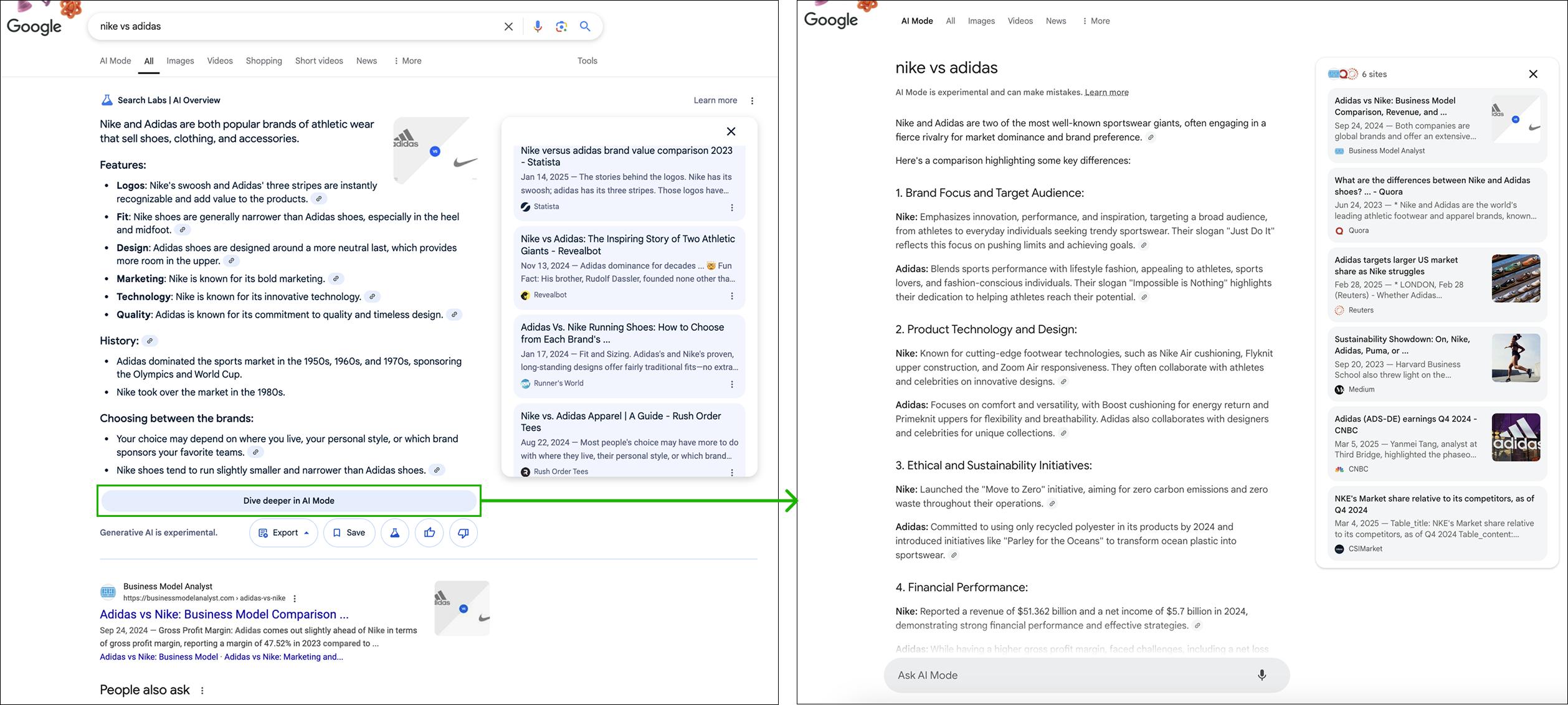
One important development in Google’s AI search experiences is its effort to make website sources easier to discover.
Google announced improvements to AI Mode and AI Overviews that include more inline links, links appearing higher in responses, more prominent related articles, and better ways to identify useful sources. The goal is to make it easier for users to continue exploring the web after receiving an AI-generated answer.
This is important for publishers and businesses because content visibility may not always depend on being the first traditional organic result.
Websites should create pages that offer something worth exploring further, such as:
- Original research and useful statistics.
- Detailed industry insights.
- Practical tutorials and implementation guides.
- Real project experience and case studies.
- Meaningful comparisons and expert recommendations.
- Updated information on changing technologies.
Content that adds genuine value to a topic has a stronger purpose than pages created simply to target search terms.
5. Website Content Quality and Originality Matter More Than Content Volume
The increasing use of AI writing tools has made it easier for businesses to publish content at scale. However, producing large quantities of similar articles does not automatically improve search performance.
When multiple websites publish similar AI-generated explanations, their content can become repetitive, predictable, and less useful. Businesses need to differentiate their websites by adding knowledge, experience, examples, and insights that readers cannot easily find elsewhere.
A better content strategy should prioritize:
Original expertise: Include practical insights from actual development, SEO, marketing, and business experience.
Content depth: Explain a topic thoroughly without adding unnecessary paragraphs to reach a word count.
Accuracy: Check technical information, statistics, examples, and claims before publishing.
Freshness: Update pages when technologies, search features, pricing, or industry practices change.
Reader value: Make every section useful to the audience rather than writing primarily for search engines.
Google’s guidance for AI search continues to emphasize established SEO fundamentals and helpful, reliable, people-first content rather than special AI optimization requirements.
For companies investing in SEO, the goal should be to create a stronger content resource—not simply a larger blog archive.
6. Technical SEO Still Determines Whether Google Can Access Your Website
AI-powered search does not eliminate the need for technical SEO. A website still needs a reliable technical foundation to help search engines discover, crawl, render, and index its content.
Even a well-written blog may struggle to gain visibility if important pages are blocked from crawling, broken, poorly linked, or difficult to render.
Businesses should regularly review the following technical SEO factors:
- Crawlability: Make sure search engine bots can access important pages.
- Indexability: Check that valuable pages are not unintentionally blocked by noindex directives or other restrictions.
- Website speed: Reduce unnecessary scripts, optimize images, and improve loading performance.
- Mobile usability: Make sure content, navigation, and functionality work properly across devices.
- URL structure: Use descriptive, clean URLs that make page topics easy to understand.
- Internal linking: Connect important pages with relevant content to improve discovery and navigation.
- Structured data: Implement appropriate schema markup where applicable, ensuring it accurately reflects visible page content.
- HTTPS security: Keep the website secure and maintain a properly configured HTTPS connection.
Google’s official guide to AI features and websites explains that websites should continue following the same technical requirements and SEO fundamentals to be eligible for AI search experiences. There is no separate technical shortcut that guarantees inclusion in AI Overviews or AI Mode.
7. Internal Linking Is Becoming More Valuable for Website Growth
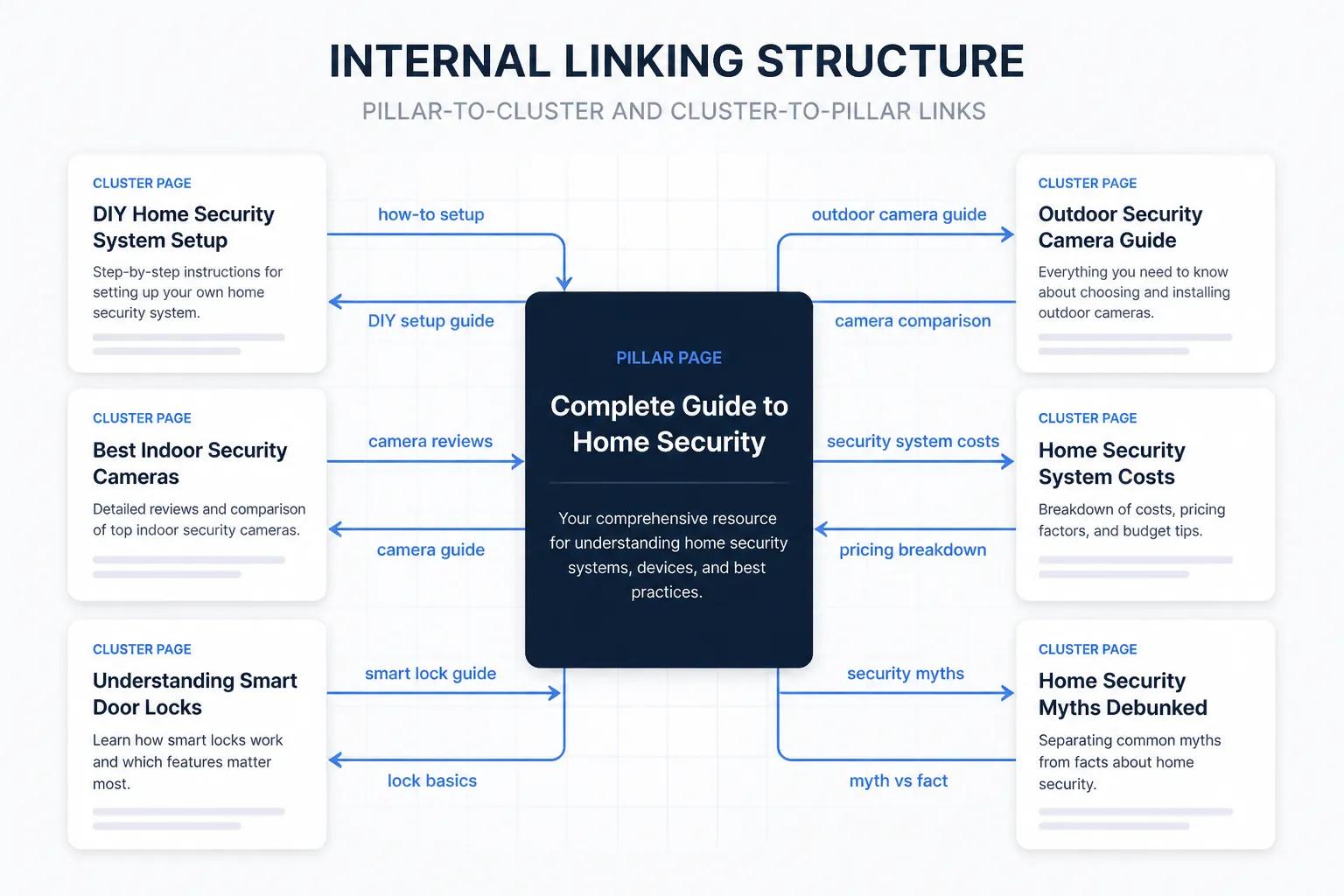
Internal linking is often overlooked when businesses focus heavily on backlinks and keyword rankings. However, a well-connected website makes it easier for visitors and search engines to discover related information.
A strong internal linking strategy connects service pages, blogs, case studies, guides, and category pages based on their relevance. It also helps visitors move naturally from an informational page to a commercial page without feeling forced.
For example, a business exploring digital marketing strategies may also need information about SEO, content marketing, web development, and AI-powered solutions. Connecting these topics through relevant internal links can create a more useful website experience.
Businesses can also strengthen topical authority by building content clusters around specific services rather than publishing isolated articles.
A practical structure could look like this:
– Main SEO service page
- AI SEO and AI search optimization
- Technical SEO guides
- Keyword research strategies
- Content optimization
- Google algorithm updates
- SEO reporting and performance measurement
This approach creates a connected content ecosystem that supports both user navigation and long-term organic visibility.
For businesses researching the digital marketing landscape, our guide to Top 10 Digital Marketing Companies provides an additional resource for understanding the agencies and services available in the industry.
8. Brand Authority and Trust Signals Are Essential for Search Visibility
Search engines need to understand what a business does, which topics it covers, and whether its website provides reliable information.
A strong digital presence is built across multiple touchpoints. This includes the website, company profiles, relevant industry publications, business directories, social platforms, customer reviews, and other credible references.
Businesses should consistently work on:
- Publishing content under identifiable authors or knowledgeable contributors.
- Maintaining accurate company information across platforms.
- Showcasing real projects and case studies.
- Collecting genuine customer reviews.
- Earning relevant industry mentions and backlinks.
- Creating detailed service pages that clearly explain expertise.
- Demonstrating experience through useful examples.
For companies operating in AI and software development, industry authority can also be strengthened through educational content that demonstrates technical knowledge. Businesses interested in understanding the AI development market can explore our Top 10 AI Development Companies article.
The objective is to create a consistent and credible brand identity that users can recognize and search engines can better understand.
9. SEO Performance Measurement Is Expanding Beyond Rankings

Search rankings remain important, but they do not provide a complete picture of SEO performance. With changing search experiences, businesses need to understand how organic visibility contributes to traffic, engagement, enquiries, and revenue.
SEO reporting should include a combination of traditional and business-focused metrics.
| SEO Metric | Why It Matters |
|---|---|
| Organic clicks | Measures visits generated from search |
| Search impressions | Shows how often pages appear in search results |
| CTR | Measures how effectively search appearances generate clicks |
| Keyword positions | Tracks ranking changes for target searches |
| Organic conversions | Connects SEO to enquiries, leads, and sales |
| Landing page performance | Identifies pages driving meaningful traffic |
| Engagement | Helps assess whether visitors find the content useful |
| Indexed pages | Helps monitor search accessibility and index coverage |
| Assisted conversions | Identifies SEO’s contribution to longer customer journeys |
Google Search Console and Google Analytics can help businesses understand organic performance, identify opportunities, and investigate changes in user behaviour.
Companies should avoid judging an SEO campaign based on one keyword or a temporary ranking fluctuation. A more useful evaluation considers visibility, qualified traffic, conversion performance, and growth over time.
10. How Businesses Should Adapt Their SEO Strategy to Google’s Latest Changes
Google’s evolving search experience does not mean businesses need to abandon their existing SEO strategies. Instead, they need to improve their foundations while adapting to how people search, discover information, and evaluate brands.
Here are the key actions businesses should prioritize:
-
Audit existing content: Identify outdated, thin, repetitive, or underperforming pages.
-
Expand search intent coverage: Create content addressing informational, commercial, and transactional queries.
-
Improve technical performance: Fix indexing, crawling, speed, mobile usability, and website structure issues.
-
Build topical authority: Develop connected content around important services and industry subjects.
-
Strengthen brand trust: Showcase expertise, genuine experience, customer feedback, and credible references.
-
Optimize for AI search experiences: Make content clear, accessible, factual, and easy to navigate.
-
Improve internal linking: Connect related blogs, service pages, and resources naturally.
-
Track business outcomes: Measure leads, enquiries, sales, and qualified organic visits alongside rankings.
Businesses that combine these efforts can build a more sustainable search strategy instead of relying on short-term ranking improvements.
11. How AI SEO Services Can Help Businesses Adapt to Google’s Changes
As search engines continue integrating AI into their search experiences, businesses may need to rethink how they approach content, website optimization, and digital visibility. An effective SEO strategy now requires a combination of traditional search optimization, technical expertise, content planning, and understanding of AI-driven discovery.
Professional AI SEO services can help businesses identify opportunities, optimize existing pages, improve content relevance, strengthen topical authority, and adapt to changing search behaviour.
A comprehensive AI SEO strategy may include:
- AI-assisted keyword and search intent research.
- Competitor content and visibility analysis.
- Content gap identification.
- Technical SEO audits and recommendations.
- On-page SEO and content optimization.
- Topical authority and content cluster development.
- AI search and brand visibility analysis.
- Conversion-focused landing page optimization.
- SEO performance tracking and reporting.
AI tools can help SEO professionals process information, discover patterns, and improve workflow efficiency. However, strategy, quality control, industry knowledge, and meaningful content creation remain essential for sustainable results.
Businesses looking to improve their organic visibility can explore AresourcePool’s AI SEO Services to understand how AI-driven strategies can support their search optimization and digital growth objectives.
Conclusion
Google Search is evolving through AI-powered search experiences, improved understanding of complex queries, enhanced source links, and new ways for users to explore information. These changes are influencing how websites compete for visibility and how businesses attract potential customers through organic search.
However, the fundamentals of SEO remain important. Websites still need accessible technical foundations, relevant content, clear structure, credible information, and a positive user experience. AI is changing how search results are presented, but it has not eliminated the need for quality websites or meaningful optimization.
Businesses should use this period of change as an opportunity to strengthen their SEO strategies, improve their content resources, build brand authority, and understand how customers are discovering their services.
The companies that combine strong traditional SEO foundations with thoughtful adaptation to AI-driven search will be better positioned to maintain visibility, attract qualified audiences, and achieve long-term digital growth.